Collapse the wavefunction to project reality
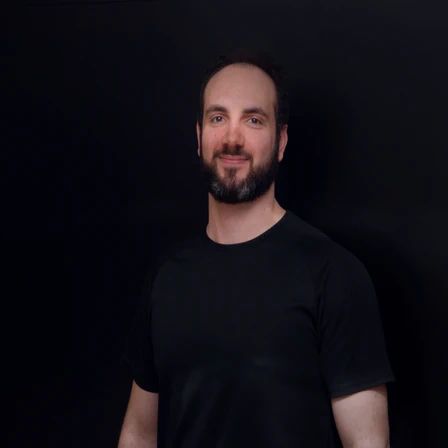
Quantum software engineer with a photonics backbone. I build power-aware MZI pipelines and CV/Kerr kernels, ship open-source tools (PhotonWeave, KTQ; contributor to Piquasso), and take experiments from notebook to AWS Braket. Ex AI team lead with production ML wins (face verification, anti-spoofing, OCR, industrial vision), former Qiskit Advocate, and active mentor/community builder (QEgypt, Alexandria QCG).
I build the bridge between photonic hardware and quantum software. At TUM I focused on MZI-based photonic processors, CV/Kerr kernels, and joint-detection receivers—and I shipped the reproducible code (tests, docs, CI) behind the papers.
Expertise
- Quantum Machine Learning
- Photonics & QML
- CV/Kerr Kernels
- MZI Calibration
- JAX & Numerics
- Cloud Quantum Computing
Education
M.Sc. in Quantum Computing Technologies
Universidad Politécnica de Madrid
Pre-Master (Bridging Communications/Electronics/Computer Engineering)
Suez Canal University
B.Sc. in Electrical, Electronics and Communications Engineering
Suez Canal University
Career Superposition
Operating in a quantum state between classical and quantum computing
Drag to rotate • Click hotspots to navigate Swipe to rotate • Tap hotspots to navigate
|ψ⟩ = α|Classical⟩ + β|Quantum⟩
I’m a quantum machine learning researcher at the intersection of quantum computing and machine learning:
- Quantum Photonics — Piquasso simulator for CV systems
- Quantum Optimization — QAOA and quantum annealing
- Quantum ML — Feature maps and variational circuits
- Game Theory — Nash equilibrium on quantum annealers
PhotonWeave
General-purpose quantum simulator framework focused on Fock-domain optical simulations.
Piquasso (Contributor)
High-performance Python/C++ framework for efficient photonic quantum computer simulation.
Braket Nash Workflows
End-to-end cloud execution on AWS Braket for game-theoretic optimization (Nash equilibrium).

Piquasso: A Photonic Quantum Computer Simulation Software Platform
We introduce the Piquasso quantum programming framework, a full-stack open-source software platform designed for the simulation and programming of photonic quantum computers. …
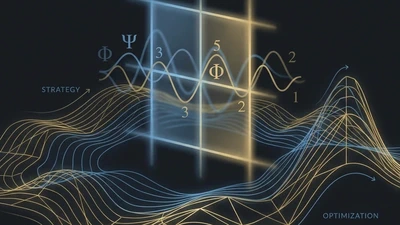
Calculating Nash equilibrium on quantum annealers
This research implements adiabatic quantum computing on D-Wave quantum annealers to find pure strategy Nash equilibria in two-player, non-cooperative games. By formulating the …

PhotonWeave
PhotonWeave is an object-oriented, open-source framework written in Python for simulating open quantum systems. It allows for the construction of arbitrary Hamiltonians, including …
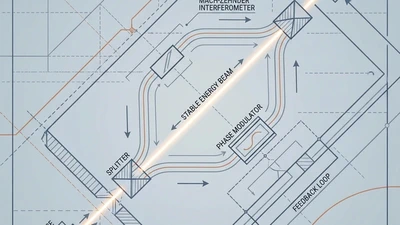
Robust calibration and energy optimization in reconfigurable photonic processors
Reconfigurable photonic processors experience performance degradation due to factors such as fabrication tolerances and thermal drift. We introduce an energy-aware calibration …

Enhancing Quantum Machine Learning: The Power of Non-Linear Optical Reproducing Kernels
This study focuses on the quantum kernel method within quantum machine learning, highlighting its compatibility with noisy intermediate-scale quantum (NISQ) devices. It introduces …